
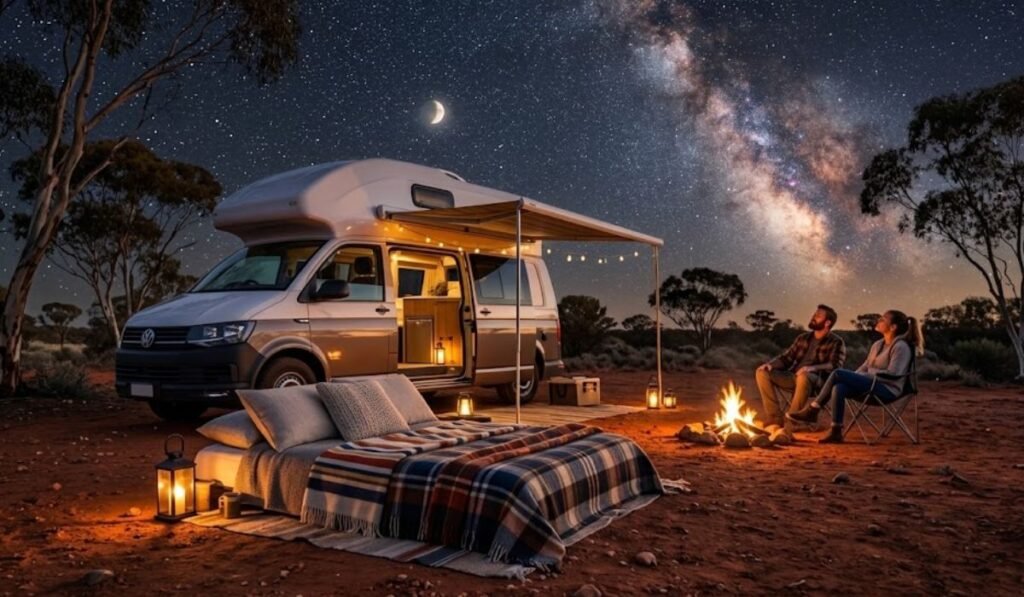

Anyone who has spent a night in the outback knows how it goes. The day climbs past 30 degrees, you’re in shorts and a t-shirt by the campfire, and then somewhere around 3am you’re wide awake, shivering and wishing you’d thrown one more layer in the car. In much of Australia, a hot day is no promise of a warm night.
If you’re planning a caravan trip, a campervan adventure or a few nights in a cabin this spring or summer, here’s how I’d pack so you actually get some sleep.
Where Nights Get Colder Than You Expect
Outback and desert areas. Clear skies and dry air let the heat escape fast once the sun goes down. Places like Uluru, the Flinders Ranges and Broken Hill can fall well below 10 degrees overnight in spring, even after a warm day.
Alpine and high country. The Snowy Mountains, the Victorian high country and the Blue Mountains can be properly cold at night well into November, and summer nights are often cooler than people expect.
Tasmania. Even in summer, nights can be cool, particularly in the Central Highlands and along the west coast.
The coast in spring. A sea breeze and a clear sky can make a beachside campsite feel a lot cooler than the daytime temperature suggested.
The easiest habit to pick up is checking the overnight minimum, not just the daytime maximum, before you leave. The Bureau of Meteorology forecasts show both, and it takes about a minute.
Layer, Don’t Overpack
You don’t need to fill the boot with doonas. The trick is to pack bedding in layers, so you can add or remove warmth as the night changes.
A lightweight blanket is probably the most useful layer you can bring. Breathable cotton blankets work on their own on mild nights, add warmth under a doona when it cools, and go straight in the wash when you get home. Check the size suits your bed, since they come in everything from single to super king.
A simple layering system looks like this:
- Base layer: a fitted sheet and a flat sheet.
- Middle layer: a cotton blanket.
- Top layer: a doona or sleeping bag for the coldest nights.
On a warm night, sleep under the sheet. As it cools, pull up the blanket. If it really drops, add the doona. That’s far easier than sweating under a heavy doona early in the evening, or freezing under a thin one at 3am.
Don’t forget what you wear to bed, either. A pair of thick socks and a beanie make a surprising difference on a cold desert night.
Bedding for Caravans and Campervans
Caravan and campervan mattresses are often an odd size, so measure yours before you leave rather than assuming your home bedding will fit. Many are close to a standard double or queen but shorter, or have a rounded corner.
A few tips from the road:
- Pack a spare set of sheets. You won’t always find a washing machine, and fresh sheets halfway through a trip feel like real luxury.
- Use a mattress protector. It keeps sand, sunscreen and sweat off the mattress.
- Bring your own pillow. It’s the one thing that makes a strange bed feel like yours.
- Store bedding in a breathable bag so it doesn’t get damp or musty in a closed van.
Cabins and Farm Stays: What’s Supplied and What’s Worth Bringing
Most cabins, farm stays and caravan park cabins supply basic bedding, but check before you go. Some provide only a mattress and pillows, and charge extra for linen hire.
Even when bedding is included, I’d still throw a few things in the car:
- A blanket, in case the supplied bedding isn’t warm enough.
- Your own pillow, if you’re fussy about support.
- A couple of towels, especially for beach and river stops.
Keeping Bedding Fresh on the Road
A few days of camping can leave bedding feeling a bit tired. These habits help:
- Air it out each morning. Drape sheets and blankets over a chair or the van door in the sun for an hour.
- Shake out sand and dirt before you get into bed, not after.
- Use laundromats in larger towns. Many caravan parks also have a laundry, so plan a wash day every few days.
- Dry everything fully before packing it away. Damp bedding in a closed van turns musty very quickly.
A Simple Sleep Packing Checklist
- Fitted sheet and flat sheet (plus a spare set)
- Cotton blanket
- Doona or sleeping bag for cold nights
- Pillows and pillowcases
- Mattress protector
- Warm socks and a beanie
- Towels
- Breathable storage bag
Pack for the Night, Not Just the Day
Australia’s big skies and clear nights are a huge part of what makes a road trip here so special. Pack the right layers and you can stay out by the campfire watching the stars, then head to bed and sleep soundly, however far the temperature drops.