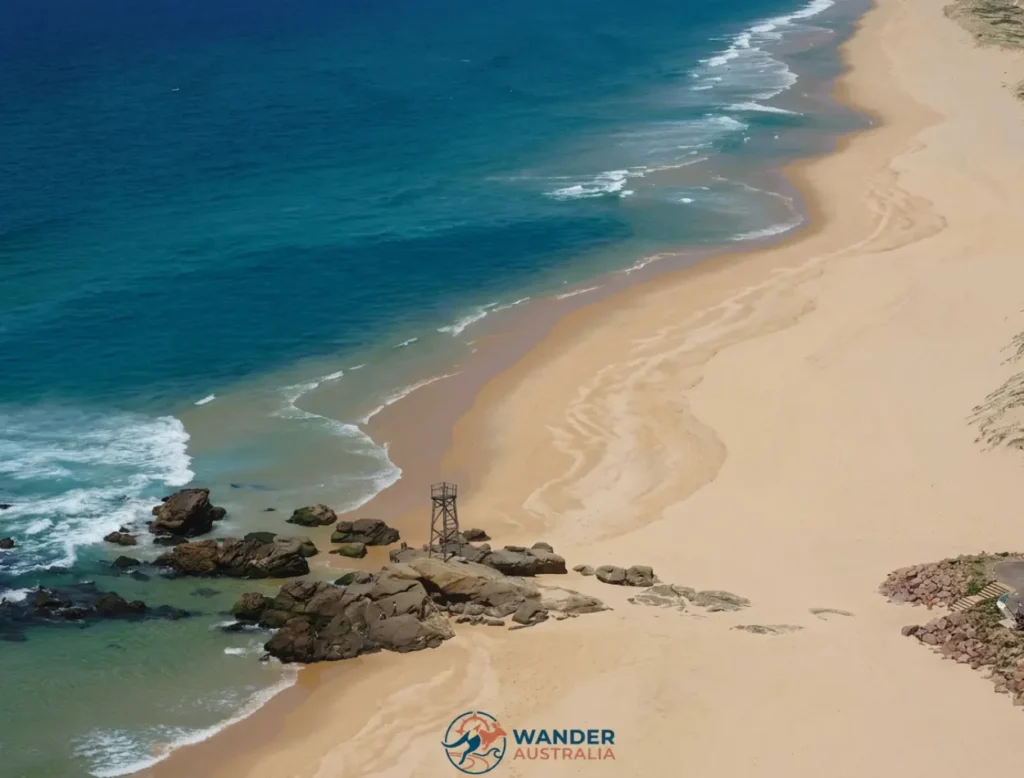

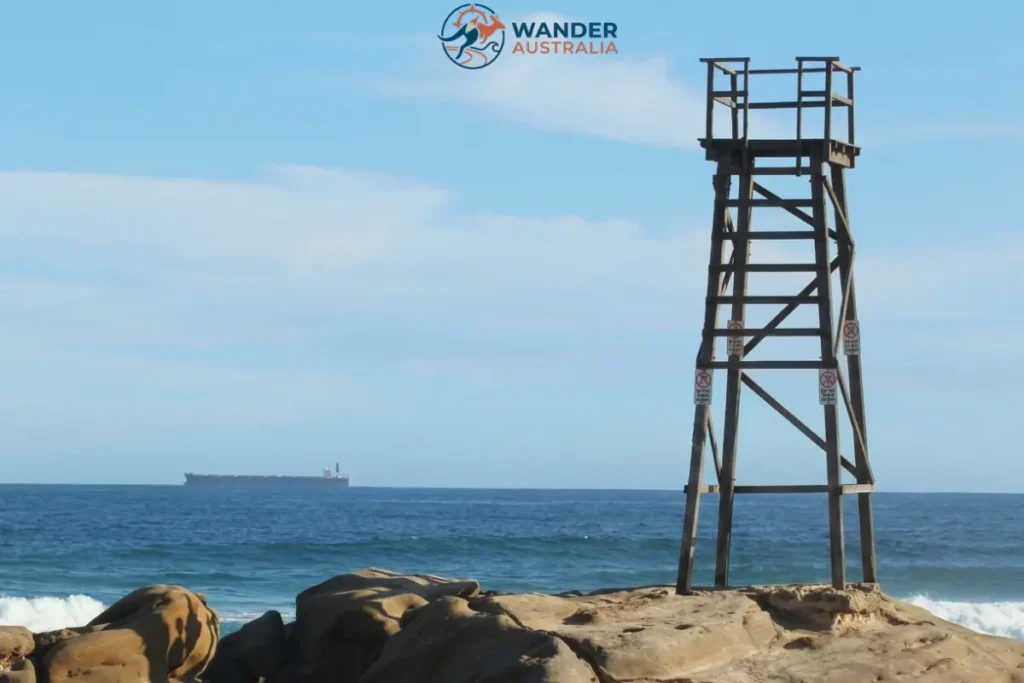
There’s a weathered timber tower standing over the sand at Redhead Beach that’s believed to be the last surviving structure of its kind anywhere on Australia’s east coast. Built by lifesavers sometime in the late 1920s or 1930s — sources vary on the exact year — it once had someone stationed at the top watching for sharks, ringing a bell or siren if one was spotted. Shark meshing eventually made the job obsolete, and towers like it up and down the NSW coast were pulled down as they rotted or rusted. This one wasn’t.
Where It Is and What It’s Actually Like
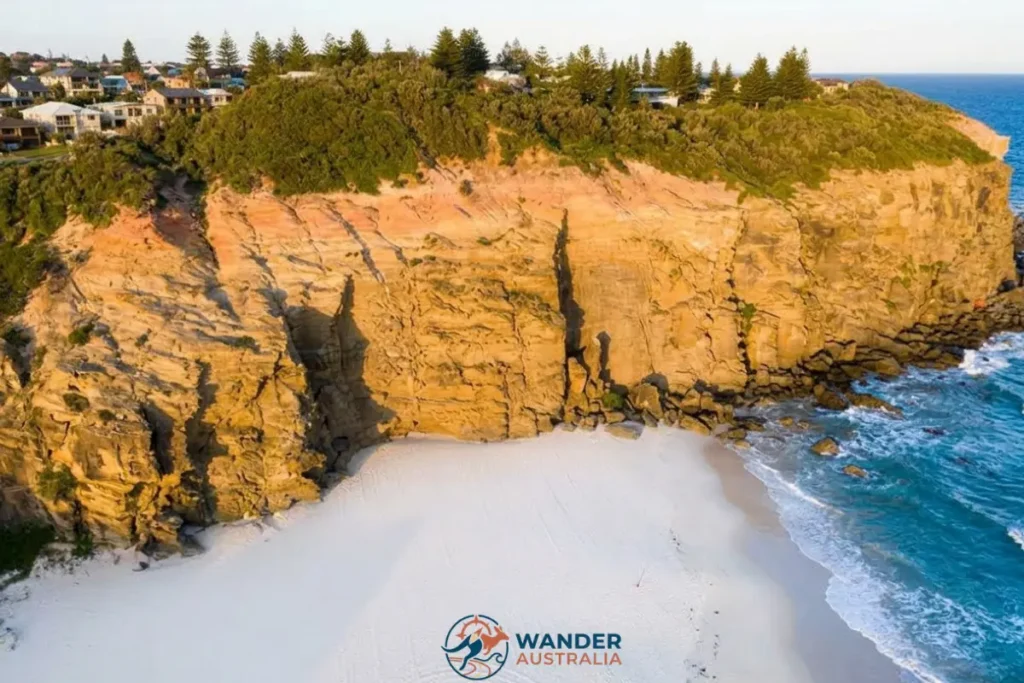
Redhead Beach sits at the northern end of Nine Mile Beach, a long stretch of coastline running from Blacksmiths Beach up to Redhead in the City of Lake Macquarie. It’s about a 25-minute drive south of Newcastle, and the beach itself is known for dramatic sandstone cliffs and rocky headlands framing a genuinely long stretch of open sand.
This isn’t a sheltered cove — it’s a proper ocean beach with real surf, which is exactly why the shark tower existed in the first place.
The One Thing That Makes It Worth the Trip
Climb the headland behind the beach for the view, but come back down for the tower itself. It’s become one of the most photographed spots in Lake Macquarie, particularly at sunrise and sunset when the timber structure silhouettes against the water. It’s no longer used for spotting anything — it’s just been preserved as a genuinely rare piece of Australian beach culture history.
What’s Actually There
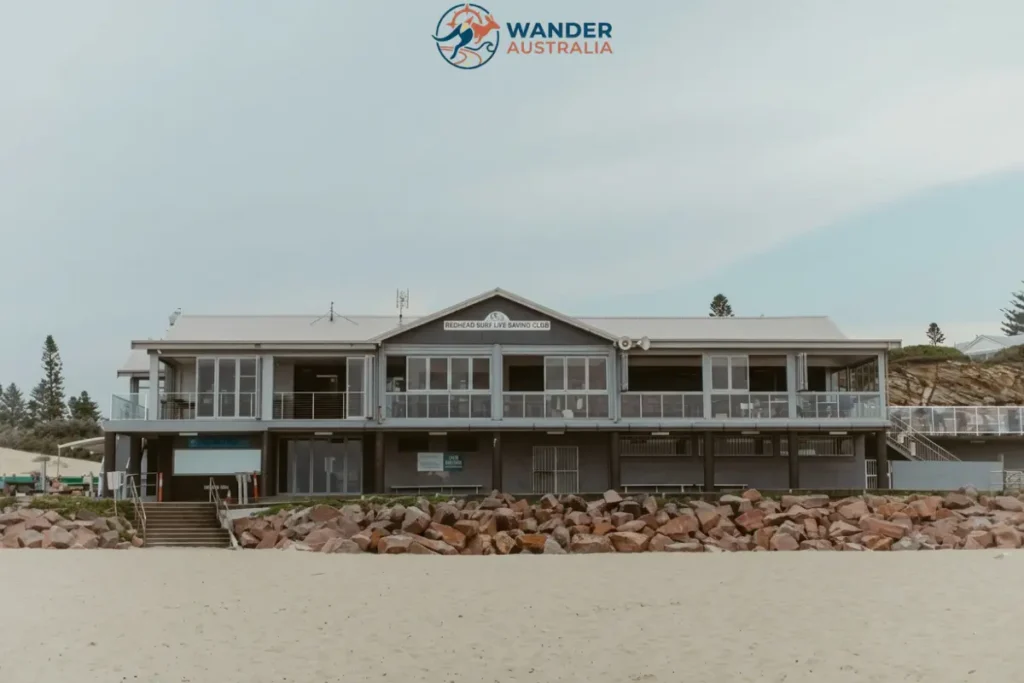
- Redhead Surf Life Saving Club, founded in 1908, patrols the beach through the warmer months
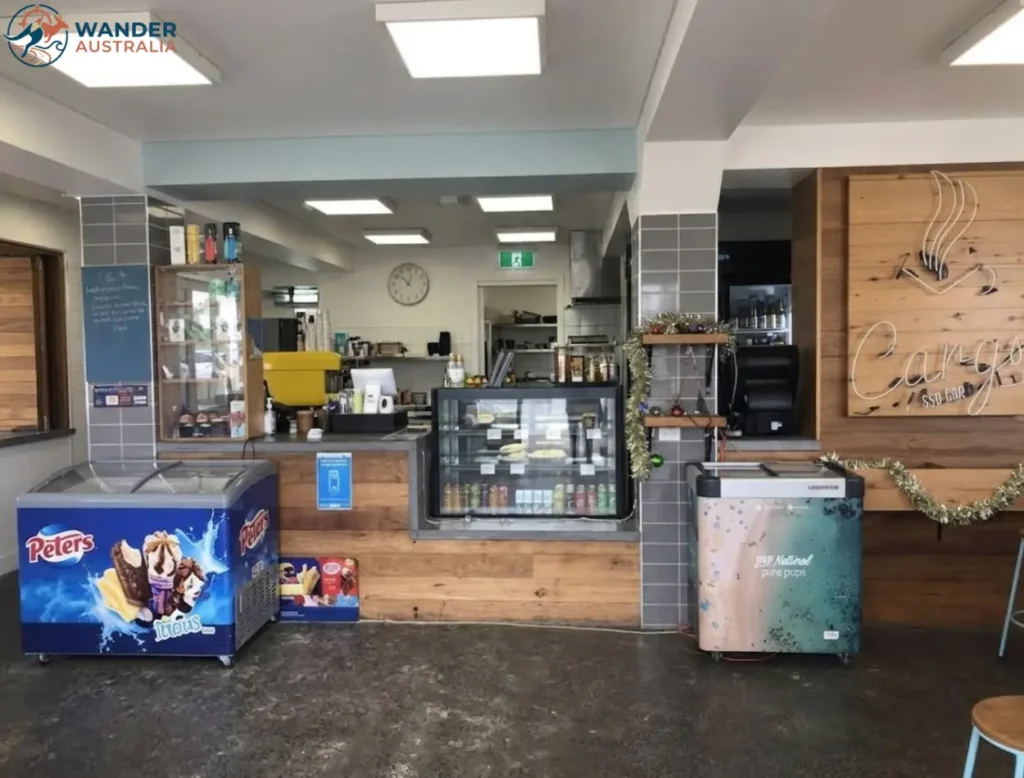
- Cargo Espresso Bar, the beachside cafe, right where most people park
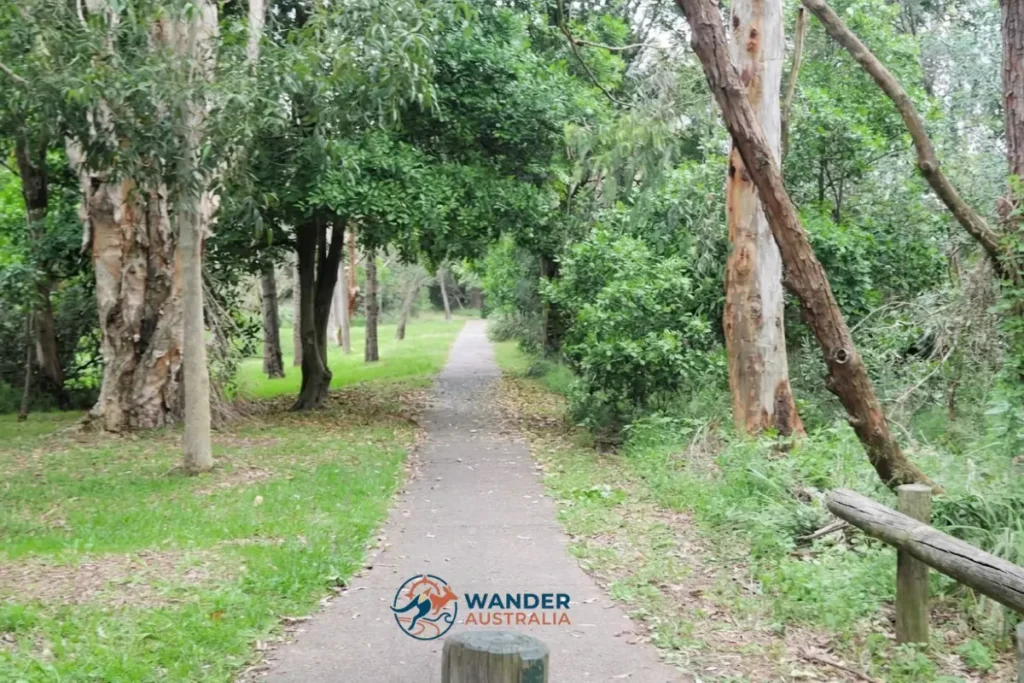
- Owens Walk, a 1.2km boardwalk circuit through restored bushland behind the beach — wheelchair and pram accessible
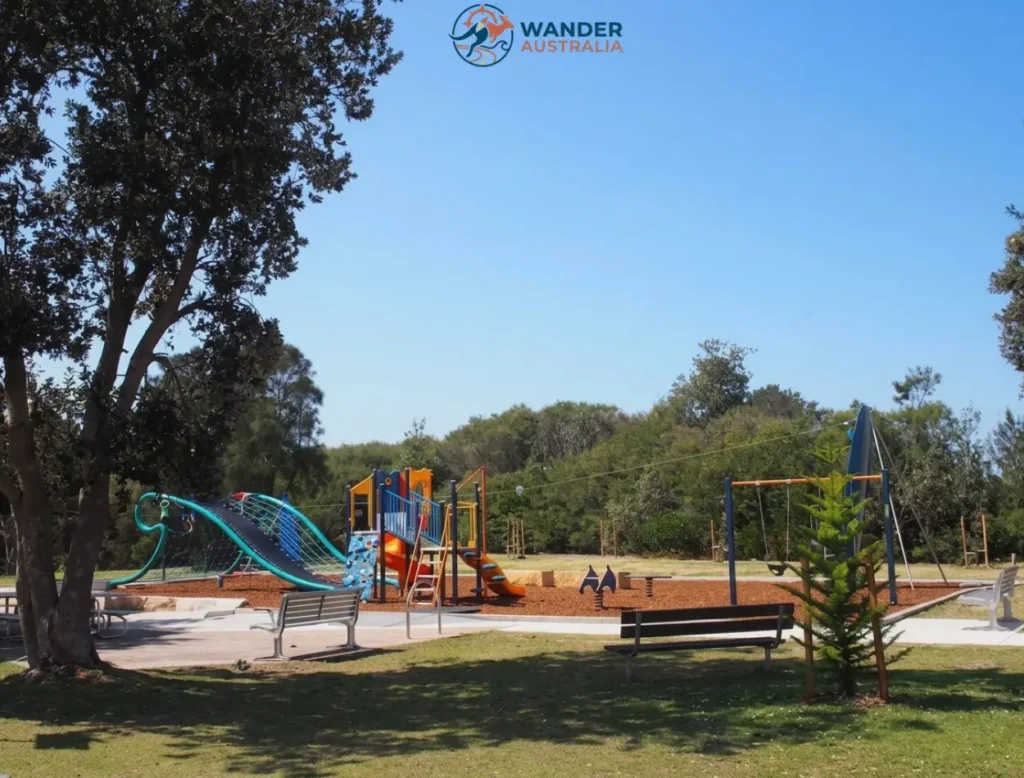
- Webb Park Playground, a solid option if you’ve got kids who need a break from sand
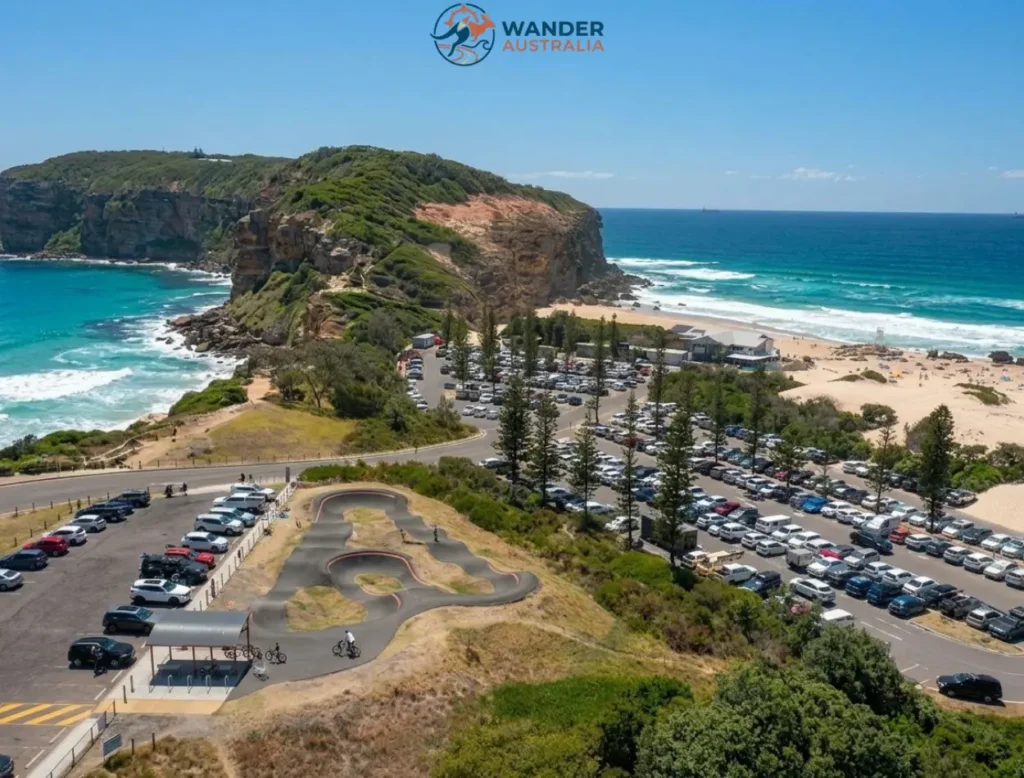
- A pump track nearby for bikers and skateboarders
- Plenty of free parking and public toilets
Honest downside: because it’s an open ocean beach rather than a sheltered pool, conditions can turn rough outside the patrolled season. If you’re swimming, stick to between the flags when the surf club is on duty — this stretch of coast isn’t the place to test currents on your own.
Getting There
Redhead Beach is a straightforward drive from Newcastle via the Pacific Highway and local roads, roughly 25 minutes depending on traffic. There’s ample free parking right by the beach, so unlike some of the more remote spots in this region, you won’t need to walk far to reach the sand.
Where to Stay
Redhead Beach Holiday Park (1A Kalaroo Rd) sits close to the beach with cabins, a swimming pool, BBQ area, and playground — a practical base if you want to stay right in the area rather than commute from Newcastle.
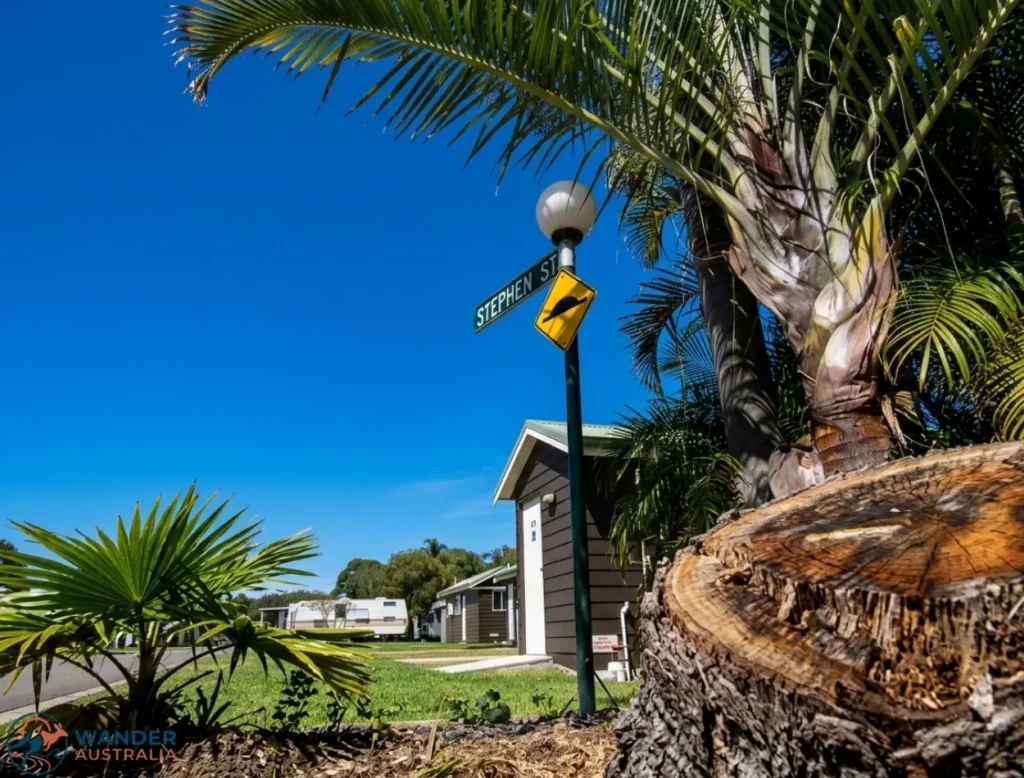
For longer stays, Lifestyle Villages Redhead on the same Nine Mile Beach stretch offers short, medium, and long-term accommodation on nine acres of landscaped grounds.
Best Time to Visit
Redhead is patrolled during the warmer months, roughly the same summer season as most Lake Macquarie beaches. If photography is your main goal rather than swimming, sunrise and sunset are genuinely the best times to catch the shark tower at its most striking — it’s a popular subject with local photographers for exactly that reason.
What to Do Nearby
- The restored Lambton Colliery, site of Australia’s first fully mechanised mine, sits at the corner of Collier Street and Geraldton Drive — a solid stop for anyone interested in the region’s mining history

- Further south along the same Nine Mile Beach stretch, our guide to Grannies Pool at Blacksmiths Beach covers a sheltered, tide-dependent swim spot worth pairing with a Redhead visit
- Dog owners will find designated on-leash and off-leash areas at Redhead itself, making it an easy stop if you’re travelling with a dog
Should You Make the Trip?
Yes — Redhead Beach earns its reputation as one of Lake Macquarie’s better beaches, and the shark tower gives it a genuine point of difference from every other stretch of NSW coastline. Whether you’re there for a swim, a walk along Owens Walk, or just to photograph a piece of history that’s disappeared everywhere else, it’s a worthwhile stop on any Lake Macquarie coastal loop.