
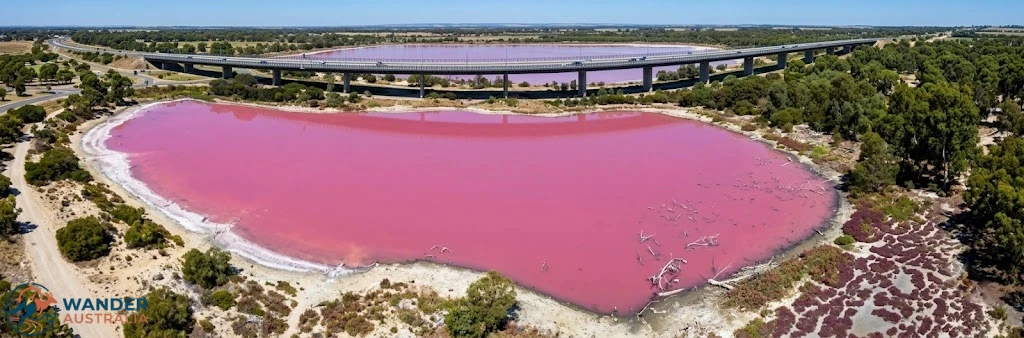

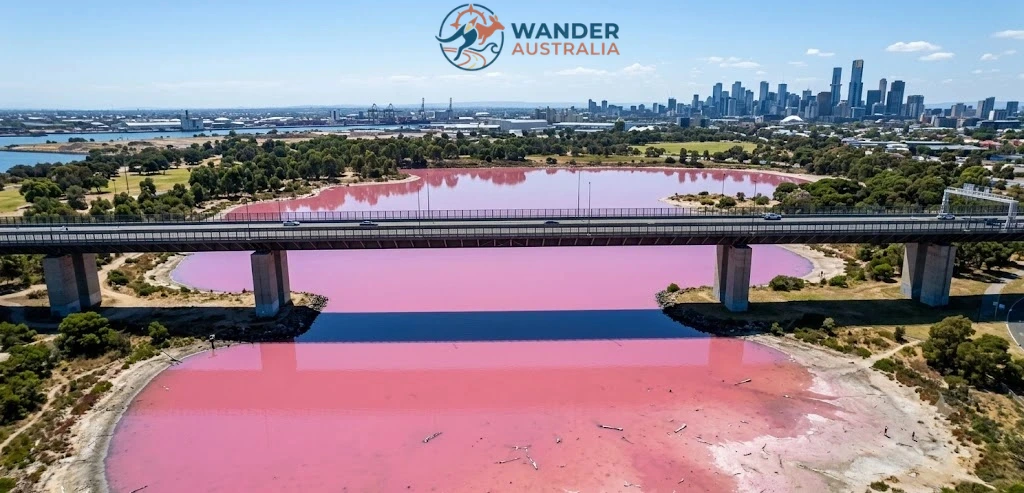
There’s a lake under the West Gate Bridge that turns the colour of bubblegum in summer, and most people driving past have no idea it’s there. It’s not photoshopped, it’s not dyed, and it’s not always pink — which is exactly why you need to time your visit right.
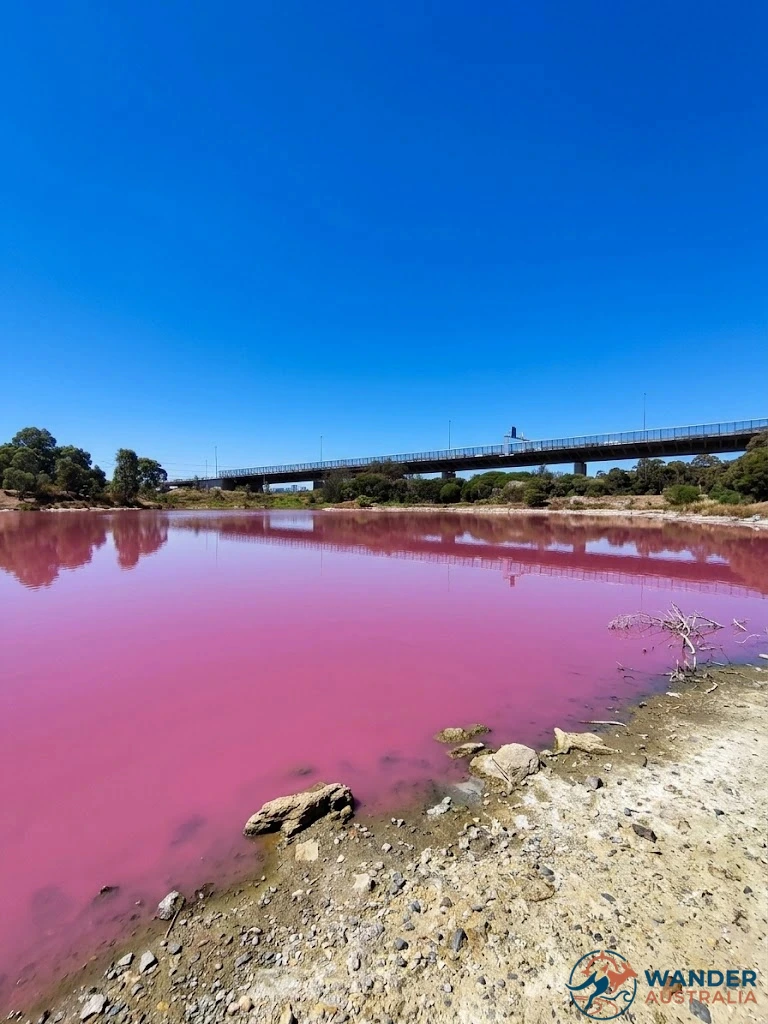
Where Is Melbourne’s Pink Lake?
Melbourne’s Pink Lake sits inside Westgate Park, a 36-hectare stretch of restored parkland on the eastern bank of the Yarra River, right beneath the West Gate Bridge in Port Melbourne. It’s about ten minutes’ drive from the CBD, which makes it one of the easiest genuinely strange natural sights you can fit into a Melbourne day trip.
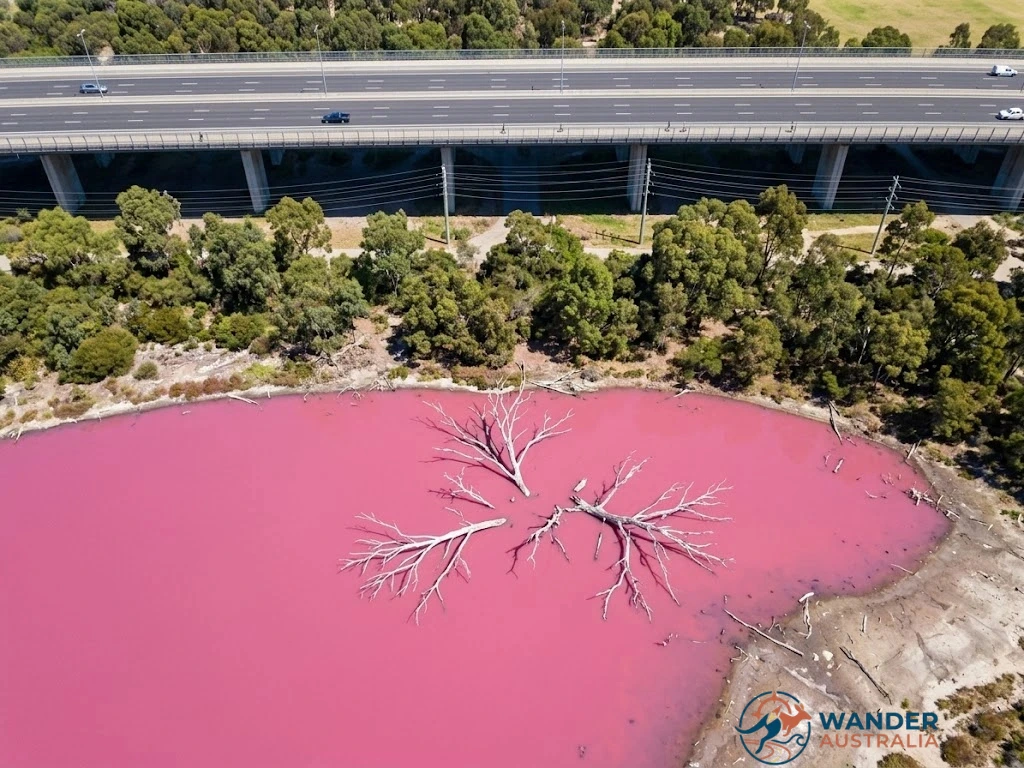
The park itself used to be a sand mine, then a dumping ground, then a disused racetrack — it’s only in the last few decades that a volunteer group, Friends of Westgate Park, turned it into the wetland and walking-trail network it is today. The pink lake is the part that gets all the attention, but the park is worth the visit even when the water’s behaving itself.
Why Does the Lake Turn Pink?
This is the part everyone asks, so here’s the honest, non-mystical answer: the lake has a very high salt concentration, which suits a particular algae called Dunaliella salina. When the water heats up and evaporates through summer, the salt concentration climbs even higher, and the algae responds by producing a red pigment to protect itself. That pigment is what tints the whole lake pink.
It’s completely natural and harmless — nothing’s been added to the water. Once it rains and the weather cools, the salinity drops, the algae stops producing the pigment, and the lake fades back to a normal grey-green. Locals only started noticing the colour change around 2012–2013, so this is a genuinely modern quirk, not some centuries-old landmark.
The one thing to know before you plan a visit: the pink colour is seasonal and unpredictable. It’s not guaranteed on any given day, even in peak season.
Best Time to Visit
- Season: Late summer into early autumn (roughly January to March) is when the lake is most likely to be pink, once heat and evaporation have had time to push the salinity up.
- Trigger conditions: The colour tends to show strongest after a stretch of hot, dry weather — a heatwave with no rain is your best bet.
- Time of day: Early morning or late afternoon gives you the softest light for photos. Midday sun tends to wash the colour out in photographs, even when it’s just as pink in person.
- Reality check: Because it depends on weather, not a calendar, there’s no way to guarantee the lake will be pink on the day you turn up. If you’re travelling specifically to see it, build in a backup day or two, or check recent photos/reports online before you head out.
Getting There
Driving: This is genuinely the easiest way. Head to Todd Road, Port Melbourne, where you can park and walk a short distance to the lake. Parking near the park can get tight on weekends once word gets out the lake is pink, so a weekday or early morning visit gives you an easier run.
Public transport: There’s no tram directly to the park, so you’re on a bus. The most straightforward option is a bus to the Todd Road drop-off, which leaves about a five-minute walk to the lake. Buses running from South Melbourne Market toward Garden City will leave you with a longer walk, closer to fifteen minutes, so factor that in if you’re relying on transport rather than driving.
What to Know Before You Go
- Swimming isn’t allowed. It’s a saltwater lake, not a swimming spot — this one’s for looking and photographing, not paddling.
- It’s free. No entry fee, no bookings, open access year-round.
- Wear proper shoes. The park’s trails cross wetland areas, and during warmer months it’s worth being mindful of insects, and snakes are occasionally reported near the wetland edges.
- Bring water and sun protection. There’s limited shade around the lake itself, and Melbourne’s summer heat is no joke when you’re standing on open ground waiting for the right light.
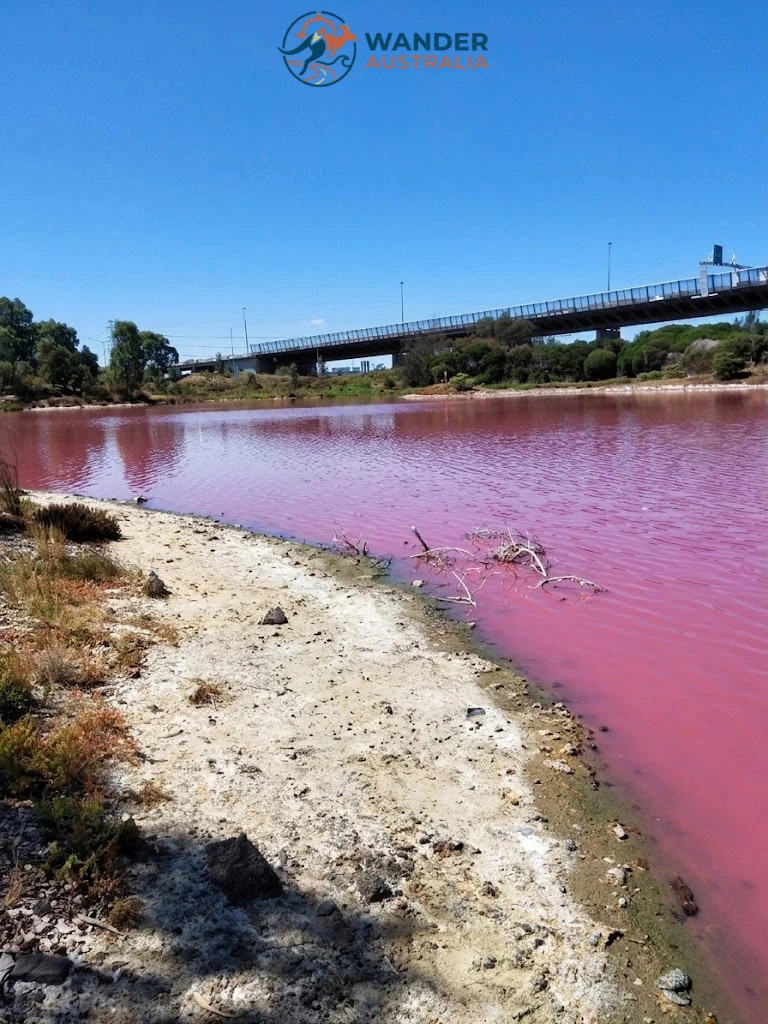
- Traffic noise is real. You’re standing right beside the West Gate Bridge, so don’t expect a quiet, secluded nature experience — it’s a striking sight with a freeway soundtrack.
Is It Worth the Trip If the Lake Isn’t Pink?
Honestly — yes, but with the right expectations. Even when the water’s back to its normal colour, Westgate Park has proper walking trails, wetlands that attract spoonbills, ibis, swans and ducks, and one of the better skyline views of Melbourne and the mouth of the Yarra you’ll get without paying for a rooftop bar. If the pink is the only reason you’re going, check recent reports first. If you’re happy to explore a genuinely well-restored urban park either way, you won’t leave empty-handed.
Quick Facts
| Location | Westgate Park, 4 Wharf Road, Port Melbourne, VIC |
| Cost | Free |
| Best time | Late summer–early autumn, after a hot dry spell |
| Best light | Early morning or late afternoon |
| Swimming | Not permitted |
| Nearest parking | Todd Road, Port Melbourne |
If you’re heading into Melbourne for a longer trip, the Pink Lake pairs well with a morning in Port Melbourne or an afternoon along the Bay Trail — worth building into a fuller day rather than treating it as a five-minute stop.
Know before you go: the lake’s colour depends entirely on weather conditions and isn’t guaranteed. Check recent visitor reports or photos before making a special trip.